
Chinese Zodiac Signs Dates: Why Your Birth Year Might Be Misleading
 Maryna Litunets · November 1, 2026
Imagine discovering that the Chinese zodiac animal you have identified with for years might not actually be yours. You were born in January, searched for your birth year, and accepted the animal displayed beside it. Then another calendar gives you a completely different result.
The explanation is usually straightforward: Chinese zodiac signs dates do not follow the January 1 beginning of the Gregorian year. The popular Chinese animal-year calendar changes at Chinese New Year, which falls in late January or February. For people born before that event, the previous year's animal still applies.
There is another complication. Some Chinese metaphysical systems use the solar term Lìchūn, or Beginning of Spring, instead of Chinese New Year to determine the year pillar. That can produce different animal-year classifications for certain early-February birthdays.
This guide explains the twelve animals, the precise Chinese New Year dates from 1996 through 2031, the five elements, the sixty-year cycle and the steps needed to identify your correct animal sign under the different traditions.
What Are Chinese Zodiac Signs and Dates?
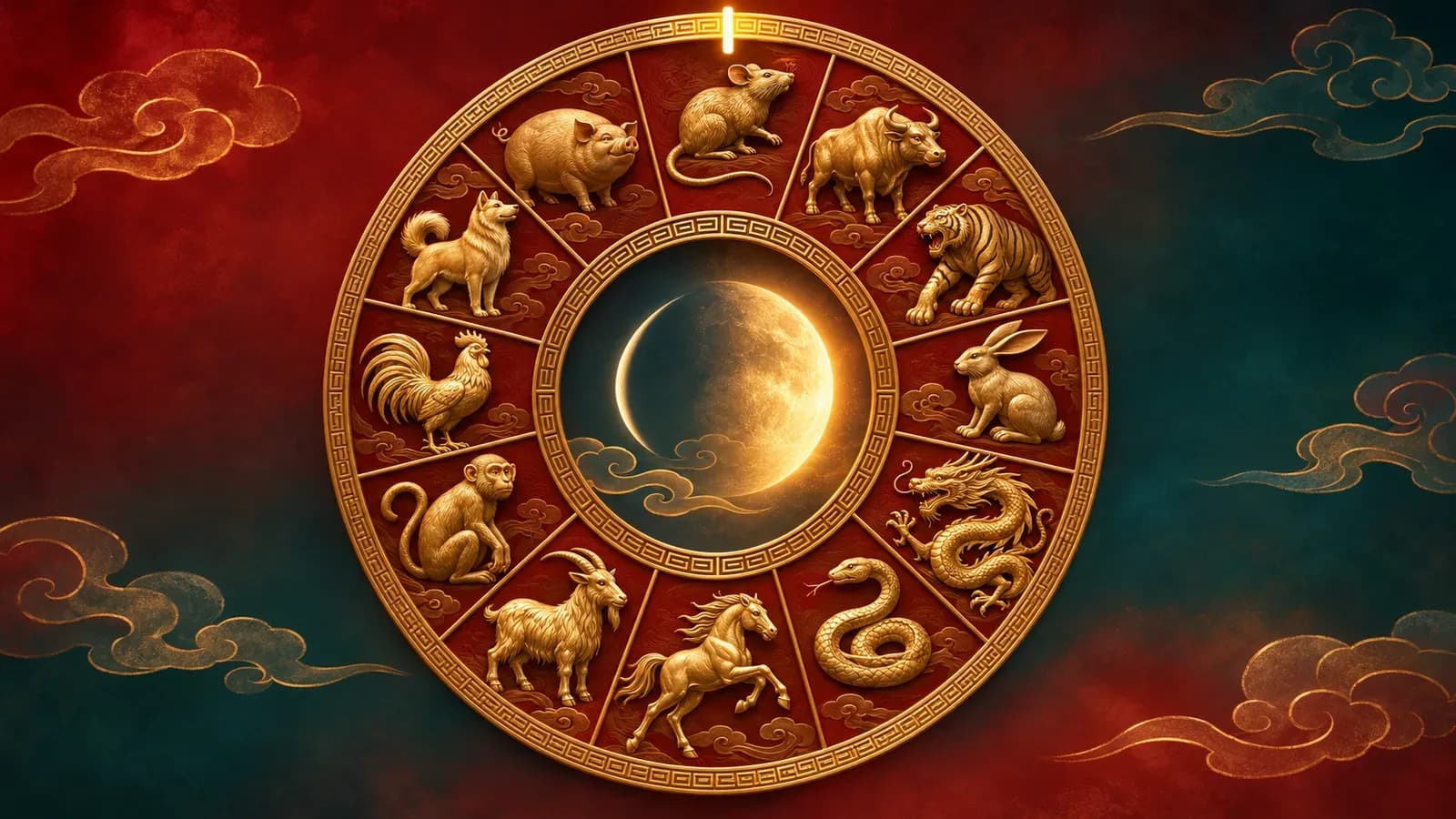
Chinese zodiac signs are twelve animal symbols assigned to a repeating cycle of years within traditional Chinese calendrical and astrological systems. The animals appear in a fixed sequence: Rat, Ox, Tiger, Rabbit, Dragon, Snake, Horse, Goat, Monkey, Rooster, Dog and Pig.
In the popular animal-year convention, the zodiac year begins on Chinese New Year. Since that celebration does not fall on January 1, an animal year overlaps two Gregorian calendar years.
For example, the Year of the Fire Horse began on February 17, 2026. Someone born on January 10, 2026, was still born during the preceding Wood Snake year under this convention.
Each animal returns every twelve years, but the traditional calendar also combines animal branches with elemental Heavenly Stems. This creates a longer sixty-year cycle.
Chinese zodiac interpretations are part of a cultural and symbolic tradition. An animal sign does not scientifically determine personality, romantic compatibility, career success or future events.
Chinese Zodiac Signs Dates Chart: All Twelve Animals
The Chinese zodiac signs dates chart identifies each animal, its position in the twelve-year sequence and the Gregorian years commonly associated with it. A birth year is a useful starting point, but the exact birthday must still be checked against the year boundary.
Zodiac animal | Recent animal years | Earthly Branch | Traditional symbolic qualities |
|---|---|---|---|
Rat | 1996, 2008, 2020, 2032 | Zi | Resourcefulness, adaptability, observation |
Ox | 1997, 2009, 2021, 2033 | Chou | Persistence, responsibility, patience |
Tiger | 1998, 2010, 2022, 2034 | Yin | Initiative, courage, independence |
Rabbit | 1999, 2011, 2023, 2035 | Mao | Diplomacy, sensitivity, calm |
Dragon | 2000, 2012, 2024, 2036 | Chen | Vitality, confidence, ambition |
Snake | 2001, 2013, 2025, 2037 | Si | Reflection, judgment, discretion |
Horse | 2002, 2014, 2026, 2038 | Wu | Movement, energy, freedom |
Goat | 2003, 2015, 2027, 2039 | Wei | Creativity, gentleness, harmony |
Monkey | 2004, 2016, 2028, 2040 | Shen | Inventiveness, adaptability, curiosity |
Rooster | 2005, 2017, 2029, 2041 | You | Organization, clarity, diligence |
Dog | 2006, 2018, 2030, 2042 | Xu | Loyalty, fairness, responsibility |
Pig | 2007, 2019, 2031, 2043 | Hai | Generosity, sincerity, enjoyment |
Goat may also be translated into English as Sheep or Ram, depending on the source. These names refer to the same eighth Earthly Branch, not three separate zodiac years.
The animal-year sequence is consistent. The calendar boundary is what creates confusion for some birthdays.
Chinese Zodiac Signs Dates by Year: 1996–2031
The following Chinese zodiac signs dates table lists the beginning of each Chinese lunar New Year from 1996 through 2031. It allows readers to identify the animal and elemental year using their full date of birth rather than the Gregorian year alone.
Gregorian year | Chinese New Year date | Zodiac animal | Year element |
|---|---|---|---|
1996 | February 19 | Rat | Fire |
1997 | February 7 | Ox | Fire |
1998 | January 28 | Tiger | Earth |
1999 | February 16 | Rabbit | Earth |
2000 | February 5 | Dragon | Metal |
2001 | January 24 | Snake | Metal |
2002 | February 12 | Horse | Water |
2003 | February 1 | Goat | Water |
2004 | January 22 | Monkey | Wood |
2005 | February 9 | Rooster | Wood |
2006 | January 29 | Dog | Fire |
2007 | February 18 | Pig | Fire |
2008 | February 7 | Rat | Earth |
2009 | January 26 | Ox | Earth |
2010 | February 14 | Tiger | Metal |
2011 | February 3 | Rabbit | Metal |
2012 | January 23 | Dragon | Water |
2013 | February 10 | Snake | Water |
2014 | January 31 | Horse | Wood |
2015 | February 19 | Goat | Wood |
2016 | February 8 | Monkey | Fire |
2017 | January 28 | Rooster | Fire |
2018 | February 16 | Dog | Earth |
2019 | February 5 | Pig | Earth |
2020 | January 25 | Rat | Metal |
2021 | February 12 | Ox | Metal |
2022 | February 1 | Tiger | Water |
2023 | January 22 | Rabbit | Water |
2024 | February 10 | Dragon | Wood |
2025 | January 29 | Snake | Wood |
2026 | February 17 | Horse | Fire |
2027 | February 6 | Goat | Fire |
2028 | January 26 | Monkey | Earth |
2029 | February 13 | Rooster | Earth |
2030 | February 3 | Dog | Metal |
2031 | January 23 | Pig | Metal |
Each year shown begins on the listed Chinese New Year date and continues until the day before the following Chinese New Year. For example, the Wood Snake year began January 29, 2025, and ended February 16, 2026, before the Fire Horse year began.
The dates follow the lunar New Year convention. The Hong Kong Observatory's Gregorian–Lunar Calendar Conversion Tables provide an official reference for checking lunar-calendar dates and related calculations.
This table does not automatically apply to a BaZi year-pillar calculation, which may use Lìchūn instead of Chinese New Year.
How to Find Your Chinese Zodiac Animal by Date of Birth
Finding your Chinese zodiac animal requires comparing your full Gregorian birthday with the beginning of the Chinese zodiac year under the convention you choose. The lunar New Year method is the most familiar approach used in general zodiac animal charts.
Follow these steps:
- Find your Gregorian birth year in the table.
- Identify the Chinese New Year date listed beside it.
- Compare your birth month and day with that date.
- If you were born on or after the listed date, use that year's animal.
- If you were born before the listed date, use the previous year's animal.
- If you are using BaZi or Four Pillars, confirm whether the calculation instead uses Lìchūn.
For birthdays well after February, the general animal-year result is usually straightforward. The problem arises around the beginning of a Gregorian year, when the Chinese zodiac calendar may still be in its previous cycle.
Example 1: February 1, 2000
Someone born February 1, 2000, belongs to the Year of the Rabbit under the Chinese lunar New Year convention. The Year of the Metal Dragon did not begin until February 5, 2000, so a birthday four days earlier still falls within the preceding Earth Rabbit year.
A calculator that uses only the Gregorian number 2000 may incorrectly return Dragon. Checking the exact lunar-year date resolves the discrepancy.
This example illustrates why year-only lookup charts can mislead people born in January or early February.
Example 2: February 10, 2026
Someone born February 10, 2026, belongs to the Wood Snake year under the lunar New Year convention, but may be assigned the Fire Horse year in a Lìchūn-based BaZi calculation. Chinese New Year fell on February 17, while the Beginning of Spring occurred earlier in February.
The disagreement is not necessarily a mathematical mistake. The systems use different definitions of when the relevant year begins.
An accurate explanation should identify which calendar method was used rather than present one animal without context.
Example 3: January 25, 2027
Someone born January 25, 2027, belongs to the Fire Horse year under the lunar New Year convention. The following Fire Goat year does not begin until February 6, 2027.
The person's Gregorian birth year is 2027, but the lunar zodiac year is still the one that began in 2026.
This is a common source of confusion for January birthdays, particularly when comparing two websites with different lookup methods.
Example 4: February 18, 2026
Someone born February 18, 2026, belongs to the Fire Horse year under the lunar New Year convention. The Chinese New Year transition had already occurred the day before, making the classification straightforward.
The difference between February 16 and February 18 in that year is significant for the lunar animal-year designation. These two birthdays fall on opposite sides of the calendar boundary.
This also shows why the exact date is more important than the general month or Gregorian birth year.
Why Does Chinese New Year Change Dates?
Chinese New Year changes its Gregorian calendar date because the Chinese traditional calendar is lunisolar, combining lunar months with seasonal relationships to the solar year. It does not divide the year into the same fixed months as the Gregorian calendar.
Lunar months follow the Moon's changing phases and usually contain twenty-nine or thirty days. Twelve such months total approximately 354 days, around eleven days shorter than the solar year.
Without adjustment, lunar months would drift through the seasons. The Chinese calendar therefore introduces leap months in selected years to keep its calendar structure aligned with seasonal cycles.
Chinese New Year generally falls between January 21 and February 20. Its date must be calculated rather than assumed from a fixed annual rule.
For this reason, Chinese zodiac signs dates are different from Western zodiac dates, which are associated with the Sun's position in the tropical zodiac.
Chinese New Year vs. Lìchūn: Which Date Is Correct?
Chinese New Year and Lìchūn are both meaningful calendar boundaries, but they belong to different conventions used in Chinese zodiac and metaphysical calculations. The correct choice depends on the system being followed.
Chinese New Year begins the first lunar month of the traditional calendar. It is widely used when assigning the familiar zodiac animal to a birth year and celebrating the annual animal cycle.
Lìchūn, meaning Beginning of Spring, is one of the twenty-four solar terms. It normally occurs around February 3, 4 or 5 and is based on the Sun's position.
In many Four Pillars of Destiny or BaZi calculations, the year pillar changes at Lìchūn rather than at Chinese New Year. This creates differences for certain early-February birthdays.
Feature | Chinese New Year convention | Lìchūn convention |
|---|---|---|
Boundary type | Beginning of the first lunar month | Solar term, Beginning of Spring |
Typical Gregorian period | January 21 – February 20 | Approximately February 3–5 |
Common use | Popular animal-year identification | Many BaZi/Four Pillars year-pillar calculations |
Early-February result | May still be previous lunar year | May already be new solar-term year |
Key requirement | Gregorian–lunar conversion | Exact solar-term calculation |
Neither method should be silently mixed with the other. When a reader receives two different animals, the first question should be which year boundary each tool used.
For most general-interest animal-year charts, the lunar New Year convention is appropriate. A specialist BaZi reading should follow its particular calculation rules consistently.
The Twelve Chinese Zodiac Animals and Their Meanings
Each Chinese zodiac animal carries traditional symbolic qualities used in popular descriptions, cultural celebrations and certain forms of Chinese astrology. These associations are not scientifically established personality traits.
Rat: Resourcefulness and Observation
The Rat is the first animal in the Chinese zodiac cycle and is traditionally associated with adaptability, alertness and resourcefulness. Its symbolism emphasizes noticing opportunities, responding quickly and working with changing circumstances.
In popular descriptions, the Rat may represent social awareness and strategic thinking. The contrasting theme is overanalyzing situations or becoming excessively concerned with maintaining control.
A Rat year does not establish that everyone born during it shares these characteristics. The qualities belong to the traditional animal archetype.
Ox: Persistence and Dependability
The Ox is the second animal and traditionally represents patience, responsibility and steady effort. It symbolizes strength developed through consistent action rather than dramatic displays.
The Ox archetype is often connected with reliability and commitment to long-term responsibilities. Its potential weakness is resistance to change when an established approach no longer works.
These themes are part of traditional interpretation, not reliable predictors of behavior.
Tiger: Courage and Independence
The Tiger is the third animal and traditionally symbolizes energy, initiative and courage. In popular interpretations, it represents bold decisions and a willingness to face uncertainty.
The Tiger archetype may emphasize independence and the desire to pursue ambitious goals. Its contrasting theme is impulsiveness or difficulty accepting limitations.
Being born in a Tiger year does not determine someone's confidence, temperament or future.
Rabbit: Gentleness and Diplomacy
The Rabbit is the fourth animal and traditionally represents sensitivity, diplomacy and appreciation of harmony. Its symbolism often emphasizes careful communication, consideration and a peaceful environment.
The contrasting interpretation can involve avoiding difficult decisions or conflict. The Rabbit therefore represents a balance between gentleness and the need for clear boundaries.
The animal's associations vary across cultural and interpretive contexts.
Dragon: Vitality and Ambition
The Dragon is the fifth animal and carries especially prominent symbolism in Chinese cultural traditions. It is commonly associated with vitality, power, good fortune and confidence.
Unlike the other animals in the familiar cycle, the Dragon is a mythological creature. Its symbolism appears in many cultural contexts beyond personal horoscopes.
A Dragon year should not be interpreted as proof that people born during it will be more successful or powerful.
Snake: Reflection and Discernment
The Snake is the sixth animal and traditionally symbolizes reflection, discretion and careful judgment. Popular interpretations associate it with patience, observation and a preference for understanding a situation before acting.
Its contrasting theme may involve excessive caution or secrecy. These associations are symbolic rather than descriptions of a person's private motivations.
The Snake year is particularly relevant to the early months of 2026, before the Fire Horse year began.
Horse: Movement and Independence
The Horse is the seventh animal and traditionally represents energy, freedom, activity and enthusiasm. Its symbolism reflects movement, exploration and the desire for autonomy.
The Horse archetype may emphasize initiative and adaptability, while its contrasting theme concerns restlessness or inconsistent follow-through.
The Year of the Fire Horse began February 17, 2026. That calendar classification has cultural significance but does not predict individual life events.
Goat: Harmony and Creativity
The Goat is the eighth animal and traditionally symbolizes kindness, imagination and harmony. It may also appear as Sheep or Ram in English-language zodiac references.
The traditional description emphasizes sensitivity and creative expression. Its contrasting theme may involve uncertainty or an excessive desire to avoid conflict.
The translation difference does not create separate signs. All three English labels can refer to the same Chinese Earthly Branch.
Monkey: Ingenuity and Adaptability
The Monkey is the ninth animal and traditionally represents inventiveness, curiosity and flexibility. The archetype is often associated with clever solutions and the enjoyment of learning.
Its contrasting theme can include distractibility or impatience with repetitive routines. The qualities reflect popular symbolism rather than objective personality measurement.
The next Monkey year after 2016 begins January 26, 2028, under the lunar New Year convention.
Rooster: Organization and Precision
The Rooster is the tenth animal and traditionally symbolizes diligence, clarity and organization. Popular descriptions emphasize attention to detail and a willingness to express opinions directly.
The contrasting theme involves rigidity or excessive criticism. As with every zodiac animal, the interpretation depends on cultural tradition and should not be used as a personality diagnosis.
The Earth Rooster year begins February 13, 2029, under the lunar New Year convention.
Dog: Loyalty and Fairness
The Dog is the eleventh animal and traditionally represents loyalty, responsibility and concern for fairness. Its symbolism emphasizes dependability and attention to the needs of others.
The contrasting interpretation may involve worry, excessive caution or difficulty trusting unfamiliar situations. These are conventional archetypal themes, not measured characteristics.
The next Dog year begins February 3, 2030, under the lunar-year convention.
Pig: Generosity and Enjoyment
The Pig is the twelfth animal and traditionally symbolizes generosity, sincerity and appreciation of life's pleasures. It completes the twelve-animal sequence before the Rat begins the next cycle.
The Pig archetype emphasizes goodwill and a comfortable relationship with everyday enjoyment. Its contrasting theme may involve overindulgence or excessive trust.
The next Pig year begins January 23, 2031, under the lunar New Year convention.
The Five Elements and the Sixty-Year Chinese Zodiac Cycle
The Chinese zodiac uses five phases – Wood, Fire, Earth, Metal and Water – combined with the twelve Earthly Branches and the yin–yang Heavenly Stems. Together, these produce a repeating sixty-year cycle.
The animal repeats every twelve years, but the full stem-and-branch combination repeats every sixty years. That is why two people born twelve years apart may share an animal without sharing its elemental form.
Element | Traditional symbolic themes | Recent examples |
|---|---|---|
Wood | Growth, development and flexibility | Wood Dragon 2024, Wood Snake 2025 |
Fire | Activity, expression and energy | Fire Horse 2026, Fire Goat 2027 |
Earth | Stability, nourishment and structure | Earth Monkey 2028, Earth Rooster 2029 |
Metal | Discipline, clarity and determination | Metal Dog 2030, Metal Pig 2031 |
Water | Adaptability, reflection and depth | Water Tiger 2022, Water Rabbit 2023 |
Each of the five elements appears in yin and yang forms among the ten Heavenly Stems. These combine in sequence with the twelve branches until the original pairing returns after sixty steps.
For example, both 1966 and 2026 are Fire Horse years, separated by sixty years. Meanwhile, 2014 was a Wood Horse year, sharing the animal but not the full element–animal designation.
This system differs from the four-element framework used in Western tropical astrology. Chinese five-phase symbolism should not be translated directly into Western fire, earth, air and water categories.
Chinese Zodiac Compatibility: Which Animals Traditionally Match?
Chinese zodiac compatibility traditionally compares relationships between the twelve Earthly Branches, including Six Harmony pairings and Three Harmony groups. These categories belong to a symbolic system and cannot predict the quality of an actual relationship.
The Six Harmony pairings are commonly presented as:
Traditional pairing | Animals |
|---|---|
1 | Rat + Ox |
2 | Tiger + Pig |
3 | Rabbit + Dog |
4 | Dragon + Rooster |
5 | Snake + Monkey |
6 | Horse + Goat |
The Three Harmony groups contain three animals each: Rat–Dragon–Monkey, Ox–Snake–Rooster, Tiger–Horse–Dog and Rabbit–Goat–Pig.
Traditional interpretations treat these combinations as symbolically cooperative. Other branch relationships are described as clashes or tensions, but they should not be mistaken for evidence that people with those animal signs are unsuitable partners.
A full Chinese astrological relationship analysis may use more than the year animal, depending on the tradition. Comparing only two animal names is a simplified cultural reference.
Chinese Zodiac Dates vs. Western Zodiac Dates
Chinese zodiac signs dates and Western zodiac dates use different calendar systems, signs and interpretive methods. The Chinese animal-year cycle should not be confused with the Western Sun signs associated with months and days.
Feature | Chinese zodiac | Western tropical zodiac |
|---|---|---|
Familiar signs | Twelve animals | Twelve signs from Aries to Pisces |
Basic birthday classification | Animal year | Sun sign |
Main boundary | Chinese New Year in popular convention | Sun crossing a 30° zodiac sector |
Number of elements | Five phases | Four elements |
Full cycle | Sixty years for stem–branch combinations | Annual Sun cycle |
More detailed method | Systems including Four Pillars | Natal charts and synastry |
A person can simultaneously be a Western Libra and a Chinese Dragon, for example. Those labels do not conflict because they come from different traditions.
AstroSynth's Birth Date Compatibility Calculator uses Western tropical Sun signs. It does not calculate Chinese zodiac animals or BaZi pillars, so it should not be presented as a Chinese astrology calculator.
Frequently Asked Questions About Chinese Zodiac Signs Dates
What are the twelve Chinese zodiac signs in order?
The twelve Chinese zodiac signs are Rat, Ox, Tiger, Rabbit, Dragon, Snake, Horse, Goat, Monkey, Rooster, Dog and Pig. They follow a repeating twelve-year sequence. The combination with elemental Heavenly Stems produces a longer sixty-year cycle.
What Chinese zodiac sign is 2026?
2026 is the Year of the Fire Horse beginning February 17 under the popular lunar New Year convention. Someone born before that date is classified in the previous Snake year. Certain BaZi calculations use Lìchūn instead, resulting in a different boundary.
What Chinese zodiac sign is 2027?
2027 is the Year of the Fire Goat beginning February 6 under the lunar New Year convention. January birthdays in 2027 remain in the Fire Horse year. Goat may also be translated as Sheep or Ram.
Does the Chinese zodiac change on January 1?
The Chinese zodiac animal does not normally change on January 1 under the traditional lunar-year convention. The change occurs at Chinese New Year, generally between January 21 and February 20. Some specialist systems use the early-February Lìchūn solar term.
Why do two Chinese zodiac calculators give different animals?
Two calculators may use different year boundaries, particularly Chinese New Year versus Lìchūn. Some less precise tools also assign animals from the Gregorian year without checking the exact birthday. An accurate result should identify the convention being used.
What is the Chinese zodiac for someone born January 2000?
Someone born in January 2000 belongs to the Rabbit year under the lunar New Year convention. The Dragon year did not begin until February 5, 2000. A year-only chart may therefore produce the wrong result for this birthday.
How often does the same Chinese zodiac animal repeat?
The same Chinese zodiac animal repeats every twelve years. The identical combination of animal and elemental Heavenly Stem returns every sixty years. For example, 1966 and 2026 are both Fire Horse years.
Can Chinese zodiac signs predict romantic compatibility?
Chinese zodiac compatibility is a traditional symbolic interpretation, not a scientifically validated predictor of romance. Harmony groups and animal pairs can be interesting cultural concepts. Real compatibility depends on mutual respect, communication and individual circumstances.
Is the Chinese zodiac the same as the lunar calendar?
The Chinese zodiac is closely connected with traditional Chinese calendrical systems but is not identical to the entire lunar calendar. The full calendar includes months, leap months, solar terms and other elements. The twelve animal signs are only one component of the larger tradition.
What is the difference between a Horse and a Fire Horse?
Horse identifies the animal branch, while Fire Horse identifies a specific elemental combination within the sixty-year cycle. Someone born in 2014 and someone born in 2026 share the Horse animal but have different elemental designations. The elemental labels are symbolic, not measurable personality categories.
Final Thoughts: Check the Boundary Before Choosing Your Animal
Chinese zodiac signs dates become much easier to understand once the calendar boundary is clear. Every animal returns after twelve years, but a Gregorian birth year alone may be misleading for people born in January or February.
The exact Chinese New Year date determines the popular lunar-year animal designation. In specialized systems such as BaZi, the Lìchūn solar-term boundary may instead be relevant, so both the calculation and its underlying convention should be made explicit.
For a reliable calendar reference, consult the Hong Kong Observatory's Gregorian–Lunar Calendar Conversion Tables. They provide a stronger starting point than a simple chart that assumes every animal year begins on January 1.