
Zodiac Dates and Signs: What Happens on the Day Your Sign Changes?
 Maryna Litunets · October 10, 2026
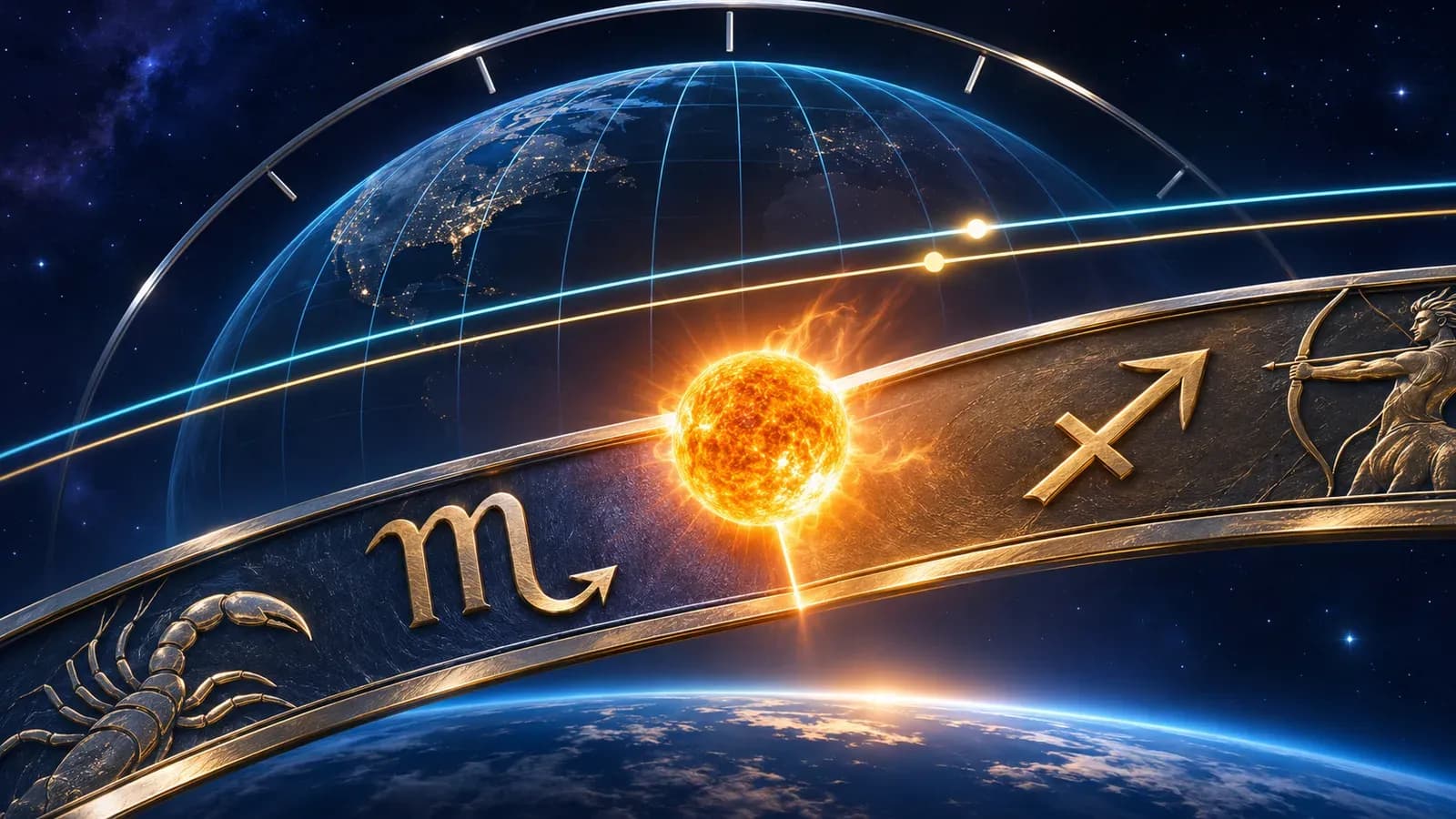
You were born on July 22. One astrology website calls you Cancer, while another confidently says Leo. Both provide familiar descriptions, and both seem certain. Which one is correct?
The answer depends on something that most popular zodiac calendars leave out: the exact moment when the Sun crossed from one zodiac sign into the next during your birth year.
Zodiac dates and signs are not defined by fixed midnight cutoffs. In Western tropical astrology, each Sun sign occupies a 30-degree section of the zodiac, and a sign begins when the Sun reaches the next section. This transition occurs at a specific astronomical instant that can fall on different calendar dates in different time zones.
That distinction is especially important for people born near January 20, March 20, July 22, September 23 and December 21. A general birthday chart may be accurate for most people but uncertain for someone born only hours before or after a solar ingress.
This guide explains the exact logic behind zodiac dates and signs, provides the solar transition times for 2026 and 2027, and shows how to determine a cusp birthday without relying on contradictory horoscope tables.
Zodiac Dates and Signs: The Standard Birthday Calendar
The standard zodiac dates and signs chart lists the twelve tropical Sun signs using conventional annual birthday ranges. These ranges are convenient for everyday reference but should not be treated as exact for every birth year.
Zodiac sign | Conventional dates | Zodiac longitude | Element |
|---|---|---|---|
Aries | March 21 – April 19 | 0°–30° | Fire |
Taurus | April 20 – May 20 | 30°–60° | Earth |
Gemini | May 21 – June 20 | 60°–90° | Air |
Cancer | June 21 – July 22 | 90°–120° | Water |
Leo | July 23 – August 22 | 120°–150° | Fire |
Virgo | August 23 – September 22 | 150°–180° | Earth |
Libra | September 23 – October 22 | 180°–210° | Air |
Scorpio | October 23 – November 21 | 210°–240° | Water |
Sagittarius | November 22 – December 21 | 240°–270° | Fire |
Capricorn | December 22 – January 19 | 270°–300° | Earth |
Aquarius | January 20 – February 18 | 300°–330° | Air |
Pisces | February 19 – March 20 | 330°–360° | Water |
The table describes the order and approximate timing of the tropical zodiac. It does not mean that everyone born on March 20 is Pisces or that everyone born July 23 is Leo.
For a birthday far from a sign boundary, the conventional result is generally sufficient. For a boundary birthday, the Sun's precise ecliptic longitude is the deciding factor.
Exact Zodiac Dates and Signs for 2026 and 2027
The exact zodiac dates and signs for 2026 and 2027 are determined by the moments when the Sun enters each new 30-degree tropical zodiac sector. The table below provides those transitions in Coordinated Universal Time, rounded to the nearest minute.
Sun enters | 2026 UTC transition | 2027 UTC transition |
|---|---|---|
Aquarius | January 20, 01:45 | January 20, 07:30 |
Pisces | February 18, 15:52 | February 18, 21:33 |
Aries | March 20, 14:46 | March 20, 20:25 |
Taurus | April 20, 01:39 | April 20, 07:18 |
Gemini | May 21, 00:37 | May 21, 06:18 |
Cancer | June 21, 08:24 | June 21, 14:11 |
Leo | July 22, 19:13 | July 23, 01:05 |
Virgo | August 23, 02:19 | August 23, 08:14 |
Libra | September 23, 00:05 | September 23, 06:02 |
Scorpio | October 23, 09:38 | October 23, 15:33 |
Sagittarius | November 22, 07:23 | November 22, 13:16 |
Capricorn | December 21, 20:50 | December 22, 02:42 |
The transition information is based on published tropical solar-ingress calculations, including the Royal Observatory of Belgium's 2026 and 2027 tables. Their published values use Belgian local time; precise UTC reporting and ephemerides can differ slightly at the minute level.
The table applies to births in 2026 and 2027 only. It should not be used to identify the exact Sun sign of someone born in a different year, because the transition times and sometimes calendar dates change.
For a historical birth, use an ephemeris calculated for that birth year. The full date, time and birthplace become essential when the person was born near an ingress.
Why Zodiac Dates and Signs Change From Year to Year
Zodiac dates and signs shift slightly between years because Earth's orbital period does not align perfectly with the Gregorian calendar. The Sun's apparent movement through the tropical zodiac is continuous, while the calendar divides time into civil days.
Earth takes approximately 365.2422 days to complete a tropical year. An ordinary Gregorian year contains 365 days, while a leap year adds an extra day.
This mismatch means that the Sun does not return to the exact same zodiac longitude at precisely the same clock time each calendar year.
Leap years help keep the calendar aligned with the seasons. They do not force every zodiac transition to occur at the same local hour or date.
For example, the Sun entered Leo on July 22 in UTC during 2026, but on July 23 in UTC during 2027. The underlying zodiac position was the same – 0° Leo – while the calendar timestamp differed.
The difference is particularly noticeable when the transition occurs near midnight.
Zodiac Cusp Dates: The Twelve Sign Boundaries
Zodiac cusp dates are birthdays that fall close to the transition between neighboring Sun signs. The familiar word cusp describes proximity to a boundary, not a separate sign that combines two complete Sun-sign placements.
The following table identifies the twelve transitions readers most commonly need to check.
Transition | Approximate calendar date | Question to resolve |
|---|---|---|
Capricorn → Aquarius | January 19–20 | Had the Sun entered Aquarius? |
Aquarius → Pisces | February 18–19 | Was the Sun still in Aquarius? |
Pisces → Aries | March 20–21 | Had the March equinox ingress occurred? |
Aries → Taurus | April 19–20 | Had the Sun crossed 30° longitude? |
Taurus → Gemini | May 20–21 | Had Gemini season begun? |
Gemini → Cancer | June 20–21 | Had the June solstice ingress occurred? |
Cancer → Leo | July 22–23 | Was the Sun before or after 120° longitude? |
Leo → Virgo | August 22–23 | Had the Sun entered Virgo? |
Virgo → Libra | September 22–23 | Had the September equinox ingress occurred? |
Libra → Scorpio | October 22–23 | Had the Sun entered Scorpio? |
Scorpio → Sagittarius | November 21–22 | Had Sagittarius season begun? |
Sagittarius → Capricorn | December 21–22 | Had the December solstice ingress occurred? |
These ranges identify birthdays where closer checking may be useful. They do not mean every person born on one of these dates is uncertain.
The exact transition can occur early or late within a day. A birthday before the transition belongs to the preceding sign, while a birthday afterward belongs to the next sign.
Is July 22 Cancer or Leo?
July 22 can be Cancer or Leo depending on the year and exact birth time. It is one of the clearest examples of why conventional zodiac dates and signs sometimes disagree.
In 2026, the Sun entered Leo on July 22 at approximately 19:13 UTC. That means a birth at 12:00 UTC occurred while the Sun was still in Cancer, whereas a birth at 22:00 UTC occurred after the Sun had entered Leo.
The same transition corresponded to different local times:
Location | Leo begins in 2026, local time |
|---|---|
New York | July 22, approximately 3:13 PM EDT |
Los Angeles | July 22, approximately 12:13 PM PDT |
London | July 22, approximately 8:13 PM BST |
Kyiv | July 22, approximately 10:13 PM EEST |
Tokyo | July 23, approximately 4:13 AM JST |
These are conversions of the same astronomical instant, not different Sun-sign transitions.
A person born July 22, 2026, in New York before approximately 3:13 PM local time would have Cancer as the tropical Sun sign. A birth later that day would fall under Leo.
Someone born on July 22 in 2027 needs a different calculation because the Leo ingress occurred on July 23 in UTC.
Is September 22 Virgo or Libra?
September 22 can be Virgo or Libra depending on the exact year, time and location of birth. The transition into Libra is associated with the September equinox in the tropical zodiac.
In 2026, the Sun entered Libra on September 23 at approximately 00:05 UTC.
That moment was still September 22 in several North American time zones. In New York, for example, the ingress occurred around 8:05 PM EDT on September 22.
A person born in New York at 7:00 PM that evening would still have Virgo as their Sun sign. Someone born at 9:00 PM would have Libra.
Meanwhile, the same transition occurred after midnight on September 23 in London and during the early hours of September 23 in Kyiv.
This is an important detail for readers in the United States. A calendar showing the UTC date may appear to disagree with a local birthday-based calculation, even when both describe the same astronomical event.
Is December 21 Sagittarius or Capricorn?
December 21 can be Sagittarius or Capricorn because the Sun enters Capricorn near the December solstice, sometimes on December 21 and sometimes on December 22. The correct answer depends on the birth year and exact transition time.
In 2026, the Sun entered Capricorn on December 21 at approximately 20:50 UTC. In New York, this corresponded to about 3:50 PM EST.
A person born in New York on December 21, 2026, before that moment would have Sagittarius as the tropical Sun sign. Someone born later would have Capricorn.
In 2027, the UTC ingress occurred on December 22 at approximately 02:42. In New York, that same event occurred during the evening of December 21.
A date-only horoscope table may therefore produce different results depending on whether it uses UTC, a local time zone or a simplified annual range.
Is January 20 Capricorn or Aquarius?
January 20 is generally near the Capricorn–Aquarius transition, so the year and birth time can determine which Sun sign applies. Aquarius traditionally begins around January 20, but the transition does not occur at midnight every year.
In 2026, the Sun entered Aquarius at approximately 01:45 UTC on January 20. That was still January 19 in some North American time zones.
Someone born late on January 19 in an affected time zone could therefore have Aquarius as their tropical Sun sign, despite a conventional table listing Capricorn through January 19.
This illustrates why even a birthday one day before a familiar cutoff may require checking in certain years and locations.
Does Being Born on a Cusp Mean Having Two Zodiac Signs?
Being born on a zodiac cusp does not mean that the Sun occupies two tropical zodiac signs simultaneously. At any precise instant, the Sun has a single ecliptic longitude and belongs to one 30-degree sign.
The popular phrase Cancer–Leo cusp, for example, describes a birthday near the transition between Cancer and Leo. It does not establish that the person has half of each Sun sign.
A person may have several planets occupying neighboring signs in their natal chart. Someone with the Sun in Leo could have Mercury in Cancer or Venus in Virgo, depending on the birth date.
Those placements may create a mixture of symbolic themes within astrology, but they are separate planetary positions.
If a birth time is unknown, it may be appropriate to consider two possible Sun signs for a boundary birthday until the correct placement can be confirmed. That is uncertainty in the calculation, not evidence of a double Sun sign.
How to Calculate Your Exact Sun Sign
Calculating an exact Sun sign requires finding the Sun's tropical zodiac longitude at the recorded birth moment. The process can be performed using astronomical ephemerides or reputable natal-chart software.
A reliable calculation involves the following steps.
Step 1: Record the Complete Birth Date
The complete birth date must include the year because solar ingress times are not identical from year to year. The same calendar day can fall on different sides of a zodiac transition in different years.
Someone born July 22 in one year may have Leo, while someone born on the same calendar date in another year may have Cancer.
A date without the year is insufficient for resolving close boundary cases accurately.
Step 2: Find the Exact Local Birth Time
The local birth time identifies whether the birth occurred before or after a solar ingress on a boundary day. Birth certificates or other reliable records are preferable to estimates.
If the exact time is unknown and the birth date falls close to a transition, a calculator may not be able to identify the Sun sign with complete certainty.
Using noon as a default creates an estimated position, not a confirmed birth moment.
Step 3: Identify the Birthplace and Time Zone
The birthplace helps convert the recorded local time into the correct universal time for astronomical calculation. This is essential because the same UTC instant appears at different clock times around the world.
Historical time-zone rules and daylight saving time also matter. A city may have used a different offset during the birth year than it does today.
An accurate calculation should apply the time-zone rules relevant to the actual birth date.
Step 4: Determine the Sun's Zodiac Longitude
The Sun's tropical longitude determines its sign by placing it within one of twelve equal 30-degree sectors. Aries begins at 0°, Taurus at 30°, Gemini at 60° and the sequence continues through Pisces.
A Sun longitude of 119°59′ is still in Cancer. At exactly 120°, the Sun enters Leo.
This is the underlying mathematical reason why a transition can be resolved at a specific moment.
Step 5: Compare the Result With the Zodiac Boundary
The final step is to identify which sign contains the calculated solar longitude. If the Sun has not crossed the next 30-degree boundary, the previous sign still applies.
When a result is close to a boundary, verify that the calculation uses the intended zodiac system. Tropical and sidereal longitude systems differ, producing different sign labels for some birthdays.
The result should be reported with the relevant date and calculation convention rather than presented as an unquestionable outcome of a generic birthday table.
Why Time Zones Matter More Than Most Zodiac Charts Explain
Time zones affect the civil date and clock time of a zodiac transition, even though the astronomical event occurs at the same instant worldwide. The Sun does not enter a new tropical sign separately for each country.
Consider the Libra ingress in 2026. The approximate UTC time was September 23 at 00:05, but that instant corresponded to different local dates.
Location | Approximate local Libra ingress |
|---|---|
Los Angeles | September 22, 5:05 PM PDT |
New York | September 22, 8:05 PM EDT |
London | September 23, 1:05 AM BST |
Kyiv | September 23, 3:05 AM EEST |
Tokyo | September 23, 9:05 AM JST |
Sydney | September 23, 10:05 AM AEST |
A horoscope calendar written for New York may use September 22 for Libra, while a UTC reference lists September 23. Both may be consistent with the same solar ingress.
The problem arises when the source does not specify its time zone or treats a local transition date as universal.
For readers born near a sign change, the local clock time and year are more important than a simplified printed range.
Tropical Zodiac Dates vs. Sidereal Zodiac Dates
Tropical and sidereal zodiac dates differ because the two systems use different reference points for assigning zodiac longitude. Most familiar Western horoscope ranges refer to the tropical zodiac.
The tropical zodiac begins at the March equinox and follows twelve equal sections tied to the seasonal reference frame.
Sidereal zodiac systems use reference conventions tied more closely to fixed stars, resulting in an offset known as the ayanamsa.
Because of Earth's axial precession, tropical and sidereal longitudes are not identical.
A person who is classified as Aries in a tropical chart might receive Pisces in a sidereal chart, depending on the birth details and calculation convention.
This does not mean one website necessarily made a calculation mistake. The two systems may be applying different astrological definitions.
A reliable comparison must identify the zodiac system being used.
Zodiac Signs and Astronomical Constellations Are Different
The twelve tropical zodiac signs should not be confused with the astronomical constellations that share many of their names. Tropical zodiac signs are equal 30-degree sectors, while constellations occupy irregular regions of the sky.
The International Astronomical Union defines official constellation boundaries. The Sun's apparent path passes through thirteen astronomical constellations, including Ophiuchus.
That fact does not automatically create a thirteenth sign within the twelve-sector tropical zodiac.
The tropical zodiac and the astronomical constellations answer different classification questions. Mixing their dates produces misleading comparisons.
An article about exact zodiac dates and signs should therefore specify whether it means tropical signs, sidereal signs or actual constellation boundaries.
Does a Leap Year Change Zodiac Dates and Signs?
Leap years can affect the civil calendar timing of zodiac transitions, but they do not create new signs or automatically change everyone's Sun sign. The Gregorian calendar adds February 29 to keep its average year length close to the tropical year.
The Sun continues moving through the zodiac without regard to the labels assigned to calendar days.
A leap-year adjustment helps keep the March equinox near the same part of the Gregorian calendar, but it does not force each zodiac ingress to occur at an identical local hour.
Someone born February 29 is normally Pisces in the tropical zodiac. A leap-day birth does not imply Aquarius or a special thirteenth sign.
The correct Sun sign remains determined by astronomical position at birth.
Why Exact Zodiac Dates Matter for Astrology Compatibility
Exact zodiac dates and signs matter when identifying the correct Sun placements used in a traditional compatibility reading. A mistaken Sun sign can change the apparent elemental relationship between two people.
For example, a person born close to the Cancer–Leo boundary might be categorized as a water sign by one basic calculator and a fire sign by another. That changes the sign-level comparison with a partner.
A more detailed natal-chart reading examines additional planets and exact aspects, providing context beyond the Sun sign.
However, an accurate astronomical calculation does not establish that zodiac compatibility predicts real relationship outcomes. The interpretation remains symbolic.
For a quick comparison of conventional Sun-sign categories, AstroSynth offers a free Zodiac Compatibility Calculator. Its separate personalized synastry report uses fuller birth details to interpret selected cross-chart connections.
Frequently Asked Questions About Zodiac Dates and Signs
What are the exact zodiac dates and signs?
Exact zodiac dates and signs depend on the year and the moment when the Sun crosses each tropical zodiac boundary. The conventional calendar provides approximate ranges, while an ephemeris supplies the year-specific transition times. Birthdays near a boundary should be checked using exact birth information.
Why do zodiac date ranges differ between websites?
Zodiac date ranges may differ because websites use simplified cutoffs, different time zones or different zodiac systems. Some publish tropical solar ingress dates in UTC, while others use local calendar dates. Tropical and sidereal astrology also produce different sign classifications.
Can someone be both Cancer and Leo?
Someone cannot have the Sun simultaneously in Cancer and Leo within the tropical zodiac. A boundary birthday belongs to whichever sign contained the Sun at the precise moment of birth. Other planets may occupy the neighboring sign, but that is a separate matter.
Is July 22 Cancer or Leo?
July 22 may be Cancer or Leo depending on the birth year and exact time. In 2026, Leo began on July 22 at approximately 19:13 UTC, so births before that moment were Cancer and births afterward were Leo. Other years require their own transition calculations.
Is December 21 Sagittarius or Capricorn?
December 21 can be Sagittarius or Capricorn depending on the year, time and location. In 2026, Capricorn began December 21 at approximately 20:50 UTC. A person born before that ingress still had the Sun in Sagittarius.
Is September 23 Virgo or Libra?
September 23 can fall close to the Virgo–Libra transition, making the exact time important. In 2026, Libra began around 00:05 UTC on September 23, corresponding to the evening of September 22 in parts of North America. The local birthday and time-zone context must be considered.
Do zodiac dates change permanently?
Tropical zodiac sign boundaries remain defined by fixed 30-degree longitude sectors, while their civil calendar dates vary slightly. The system does not permanently add or remove days from a sign simply because one year's ingress occurs earlier. The exact timestamps need to be calculated for each year.
What is a zodiac cusp birthday?
A zodiac cusp birthday is a birthday close to the transition between two neighboring signs. It does not represent a separate sign or a combination of two simultaneous Sun placements. An exact birth-chart calculation resolves the placement when reliable birth information is available.
Does a leap year create an extra zodiac sign?
A leap year does not create an additional zodiac sign. The Gregorian calendar adds one day to February, while the tropical zodiac still contains twelve equal sections. February 29 is normally a Pisces date.
Is Ophiuchus a real zodiac sign?
Ophiuchus is a real astronomical constellation but not one of the twelve signs used in the standard Western tropical zodiac. The distinction comes from the difference between constellation boundaries and equal zodiac sectors. The existence of Ophiuchus does not invalidate the internal geometry of the tropical zodiac system.
Can I calculate my rising sign from my birthday alone?
A rising sign cannot reliably be calculated from a birth date alone because it depends strongly on the birth time and geographical location. The Ascendant changes as Earth rotates, meaning people born on the same date can have different rising signs. A complete natal-chart calculation requires more than a generic Sun-sign birthday table.
Do exact zodiac dates prove astrology is scientifically accurate?
Exact zodiac dates are based on calculable astronomical positions, but that precision does not validate astrological personality or relationship predictions. Astronomical position and symbolic interpretation are separate matters. A correctly calculated Sun sign does not establish a scientifically verified description of a person's behavior.
Final Thoughts: Your Zodiac Sign Changes at a Moment, Not at Midnight
Zodiac dates and signs are straightforward for most birthdays, but boundary dates require more precision than popular horoscope calendars usually provide. The actual Sun-sign transition occurs at a specific astronomical moment that can fall on different civil dates depending on the year and time zone.
For anyone born near a cusp, the correct approach is to identify the birth year, local time, location and the corresponding solar ingress. The result is one tropical Sun sign, not a combination of two.
The broader value of understanding exact zodiac dates is learning how astrology's calendar system works and recognizing the difference between astronomical calculations and symbolic interpretations.
Once you know your Sun sign, you can compare it with a partner's using AstroSynth's free Zodiac Compatibility Calculator. For a more detailed symbolic comparison of two natal charts, explore the personalized AstroSynth relationship report, which examines selected synastry contacts without presenting them as predictions of relationship succes